Raven Run is a unique, 734-acre nature sanctuary dedicated to preserving the natural beauty of the Kentucky River Palisades and early Kentucky history. Part of the property was acquired with funds from the Kentucky Heritage Land Conservation Fund. The sanctuary is a City of Lexington park, and is thus accessed free of charge.
Over 10 miles of hiking trails provide access to streams, meadows, and woodlands characteristic of the area. Numerous 19th century remnants of early settlers, as well as over 600 species of plants, allow visitors to become acquainted with and appreciate the natural world. Raven Run also accommodates over 200 species of birds throughout the year.
Current Sustainable Practices
Below are the initiatives Raven Run has completed on the Green Check scorecard.
Sustainability Management and the Green Team
- Develop a written Comprehensive Sustainability Plan
- Designate a Sustainability Coordinator or Green Team
- Hold quarterly Green Team meetings
- Provide time for quarterly sustainability updates in upper management meetings
Awareness, Education, and Outreach
- Share monthly sustainability tips in a newsletter or on social
- Include a sustainability statement and training in new hire materials or at employee orientation
- Offer trainings or workshops to educate employees about sustainability issues, policies and procedures
- Promote sustainability accomplishments in external marketing materials
- Highlight sustainability efforts or initiatives at career fairs or career days.
- Provide volunteers for community environmental projects annually
- Host an environmental event for public or employees
- Sponsor an environmental booth at an existing community event.
- Attend a sustainability workshop, tour or event
Energy Efficiency
- Assess, track, and document energy consumption
- Establish a power-down policy and checklist that includes items such as shutting off lights at night.
- Set water heater thermostats to a maximum of 120 degrees or install an inline water heater.
- Replace incandescent or CFL lights with LED lights 25-50% replacement.
- Establish a regular filter maintenance policy for your HVAC system.
- Have your HVAC system evaluated every 2 years by a certified service provider.
- Establish a policy for purchasing that requires Energy Star rated appliances and electronics.
- Install programmable thermostats and use them to adjust temperature during unoccupied hours.
- Install occupancy sensors in bathrooms, meeting room, and other infrequently used areas.
- Conduct an energy audit or assessment.
- Install or upgrade to energy efficient fans.
- Insulate roof to control energy loss.
- Take measures to insulate HVAC system and ductwork to minimize heat loss.
Waste Reduction and Recycling
- Implement a basic recycling program.
- Provide clearly marked recycling bins at work stations and/or in common areas. Recycling bins must be paired with a waste bin.
- Train and require janitorial service or staff responsible for cleaning to segregate waste and recyclable materials.
- Use reusable mugs and dishware instead of disposable plates, cups, and utensils.
- Establish a policy for environmentally friendly printing such as two-sided printing, reusing copy paper, and electronic document sharing.
- Establish an electronic waste policy that diverts all e-waste away from landfill.
- Replace at least 50% of paper stock with post-consumer recycled paper.
Water Conservation
- Assess, track, and document water consumption.
- Conduct a water audit within the last three years.
Water Quality
- Establish a policy for proper hazardous waste and chemical disposal.
- Establish a policy for proper disposal of fats, oils, and grease, distribute to staff, and post in key areas.
- Establish preventative maintenance program for sanitary sewer lateral lines on your property.
- Post information in restrooms about proper disposal of flushable wipes and other items.
- Coordinate or participate in a community litter clean-up.
- Install outdoor ash trays to prevent cigarette litter, and make pocket ash trays available to staff who smoke.
Urban Forestry and Landscapes
- Participate in a community tree planting.
- Assess the ecosystem services of trees on property using the National Tree Benefits Calculator.
- Establish a native species-only plant replacement policy for tree and shrub planting, where applicable.
- Remove all invasive species from property, where reasonable.
- Establish an Integrated Pest Management policy to reduce use of pesticides in the landscape.
- Establish environmentally friendly lawn care policies to reduce chemical pesticide and fertilizer use.
- Plant a pollinator garden.
- Plant a rain garden.
- Audit irrigation system for leaks (within last three years).
- Adjust irrigation system to water during cool periods.
Sustainable Purchasing
- Establish a policy for reducing the toxic chemicals/materials in your workplace.
- Establish a policy to purchase non-Styrofoam cups and plates for use at the workplace or at events.
- Establish a policy for purchasing locally, if available.
Transportation Efficiency
- Establish and implement a no-idling policy.
- Adopt a telecommuting option and make it available to employees.
- Install a bike rack with sufficient space for at least 10% of your employees.
- Place bicycle storage closer than any other designated parking spot.
- Provide employee shower and dressing room facility.
Innovation
- Install a 300-gallon or above water catchment system.
- Generate energy from renewable resources.
- Agroforestry demonstration with KSU.
- Chimney swift tower for bird habitat.
- Bat boxes.
- Tons of native planting.
- 104 environmental education events.

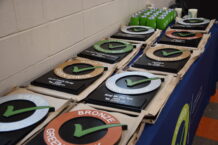
Recertified as Gold in 2026
Member since 2023